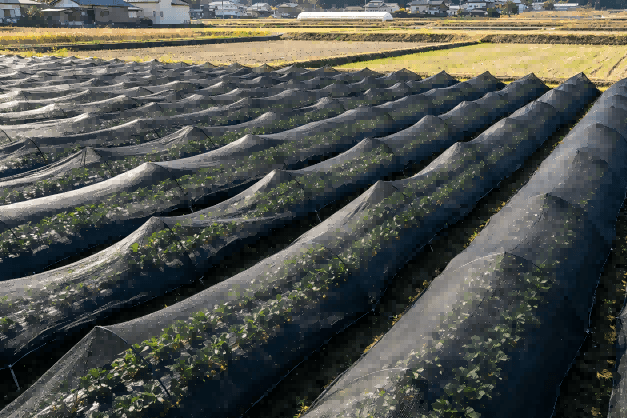
To choose the right shade net density for greenhouse tomatoes, commercial cultivators must balance thermal stress mitigation with the maximum light saturation point of Solanaceae species. Selecting an optimal Shade Net density requires evaluating how the protective textile influences the local microclimate, photosynthetic efficiency, and crop physiology. Deploying a standard 30% to 50% density canopy significantly improves fruit quality, prevents heat-induced blossom drop, and limits severe solar abnormalities like sunscald, directly maximizing market yield across multi-span operations.
Table of Contents
- 1. Thermodynamic Principles of Greenhouse Tomato Light Stabilization
- 2. Analyzing Density Thresholds for Solanaceae Crops
- 3. Physiological Impact of Shielding on Pollination and Fruit Set
- 4. Filament Topography and Photometric Spectral Configuration
- 5. B2B Sourcing Parameters for Enterprise Greenhouse Operations
- 6. Commercial Greenhouse Frequently Asked Questions
Thermodynamic Principles of Greenhouse Tomato Light Stabilization
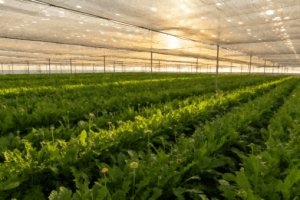
Greenhouse tomato production requires precise management of Photosynthetically Active Radiation (PAR) alongside targeted ambient temperature regulation. Tomatoes are high-light-seeking crops, yet their physiological processes begin to fail when ambient leaf temperatures cross critical thermal thresholds. Implementing an Agricultural Shade Net modifies the internal solar irradiance profile, shifting the light properties inside the greenhouse from direct, specular exposure to soft, diffuse radiation.
When direct sunlight passes through a low-performance greenhouse covering or single-layer glass film, it creates microclimate hotspots and severe thermal stress on the upper foliage layer. Leaves exposed to extreme irradiance exceed their light saturation point, causing the stomata to close to minimize moisture loss. Stomatal closure stops carbon dioxide assimilation, leading to photoinhibition and a severe drop in the crop’s net photosynthetic rate. Furthermore, prolonged leaf heating restricts water and calcium translocation throughout the plant tissue, triggering blossom end rot (BER) and radial or concentric skin cracking around the shoulders of ripening fruit.
By installing a premium woven or lockstitch knitted agricultural canopy, direct solar photons are systematically scattered across multiple angles. This structural light diffusion ensures that instead of overheating the upper canopy, photons penetrate deep into the lower structural branches of the tomato vines. Lower leaves, which typically remain below their light compensation point in conventional greenhouses, become active contributors to the plant’s overall carbohydrate production. This uniform light profile lowers peak afternoon fruit skin temperatures by 4°C to 8°C, sustaining steady transpiration currents and enabling continuous nutrient assimilation even during intense summer conditions.
Analyzing Density Thresholds for Solanaceae Crops
Selecting the appropriate density requires an evaluation of the regional baseline Solar Radiation Index (SRI) and seasonal solar irradiance cycles. Enterprise growers must adjust density parameters according to their exact latitudinal zone to prevent under-lighting or over-shading the crop canopy. As an established integrated manufacturing group, Xinhang utilizes 100% virgin high-density polyethylene (HDPE) to weave precise mesh specifications, allowing for accurate microclimate adjustments.
| Density Configuration | Regional Baseline Environment | Target Tomato Cultivation Phase |
|---|---|---|
| 20% to 30% Density | Northern Latitudes / Moderate Irradiance Zones | Early spring transplanting, northern multi-span installations, and low-radiation clear-film setups. |
| 40% to 50% Density | Tropical Regions / High-Radiation Arid Zones | Peak summer fruit ripening, desert multi-tunnel sites, and high-temperature retrofits. |
| 60% + Density | Extreme Arid Belts (Peripheral Setup Only) | Strictly limited to peripheral windbreaks, side-wall insulation, or non-vegetative staging areas. |
Low-Density Implementations (20% to 30%)
In moderate climates or regions with frequent cloud cover, a 20% to 30% light-blocking configuration provides the ideal balance for protected crops. This low-density mesh screens out intense UV radiation without significantly lowering visible PAR transmittance. It allows tomato vines to capture maximum available light energy during morning hours while providing a mild thermal buffer against peak afternoon spikes. This configuration prevents leaf tip-burn and leaf rolling, which are common stress responses in high-wire tomato operations.
Mid-Density Implementations (40% to 50%)
For operations located in equatorial regions, southern desert valleys, or high-altitude fields, a 40% to 50% density is the commercial standard. At this density, the fabric significantly lowers total solar heat flux, cooling the internal microclimate to keep greenhouse temperatures within the optimal 21°C to 27°C range. Using an engineered mesh from a reliable Shade Net manufacturer ensures precise yarn spacing. This prevents the material from blocking essential visible blue and red light wavebands, protecting the crop from stem elongation or vine stretching even under heavy shade.
High-Density Hazards (60% and Above)
Deploying configurations with densities of 60% or higher directly over a tomato canopy introduces significant operational risks. Restricting light transmission below the plant’s minimal saturation requirement forces the vines into survival mode. The plants alter their internal hormone balance, prioritizing vegetative stem elongation over flower production. This leads to extended node spacing, thin stem calipers, delayed flowering, and poor carbohydrate accumulation, which diminishes total fruit weight and lowers brix sugars at harvest.
Physiological Impact of Shielding on Pollination and Fruit Set
The internal temperature of the greenhouse directly affects the reproductive biology of the tomato flower. Managing this temperature through targeted canopy shielding is critical to achieving uniform fruit sets and avoiding pollination failures. Tomato flowers are self-pollinating and depend on mechanical vibration—from natural air currents or commercial bumblebees—to release pollen from the anther cone onto the stigma. However, when greenhouse internal temperatures rise above 32°C, the reproductive mechanics begin to break down.
Extreme heat dries out the sticky fluid on the stigma surface, preventing pollen grains from adhering and germinating properly. Furthermore, pollen grains can become completely sterile if exposed to high temperatures during the critical 48-hour development window prior to anthesis. Using a durable Agricultural Shade Net over the greenhouse structure cools the air below these reproductive failure thresholds, maintaining pollen grain viability and stigma receptivity. Additionally, maintaining a stabilized microclimate preserves the foraging efficiency of commercial bumblebee colonies, as bee activity drops significantly when internal greenhouse temperatures cross 30°C.
Filament Topography and Photometric Spectral Configuration
The physical profile of the extruded polymer yarn and its specific color pigmentation determine the microclimate’s airflow properties and the spectral quality of diffuse light inside the greenhouse. Warp-knitted round monofilament yarn structures are manufactured by extruding solid single strands of polymer material, minimizing aerodynamic drag and allowing wind to glide smoothly across the exterior surface. This geometry provides high bursting strength and dimensional stability, making round monofilaments ideal for multi-span external installations exposed to unpredictable wind storms.
Conversely, flat tape yarn configurations maximize surface area coverage per roll, offering high light-blocking performance at a lower initial cost. However, flat ribbons are more prone to catching wind currents, creating a sail effect that increases mechanical stress on greenhouse anchoring systems. Selecting the appropriate mesh coloration allows commercial growers to manage plant morphology by filtering specific wavelengths of the visible solar spectrum:
- Pearl and Reflective White Finishes: Reflect solar infrared radiation away from the greenhouse structure while scattering visible light deep into the crop rows to optimize photosynthesis.
- Specialized Black Systems: Absorb energy across both visible and invisible light bands, providing a stable, uniform shading buffer for general solar reduction.
- Industrial Green Formulations: Modify the red to far-red light ratio ($R:FR$) to promote vegetative canopy expansion and robust leaf development.
B2B Sourcing Parameters for Enterprise Greenhouse Operations
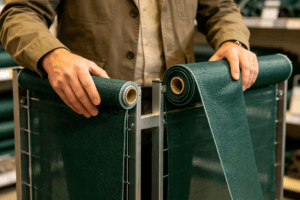
Procuring commercial Outdoor Shade Net rolls requires establishing precise technical specifications to ensure durability and performance throughout the production cycle.
| Enterprise Metric | Technical Standard | Operational Significance |
|---|---|---|
| Polymer Purity | 100% Virgin HDPE Base Resin | Eliminates recycled impurities; prevents premature material brittleness and cracks. |
| UV Stabilization | Integrated HALS Compound Matrix | Scavenges free radicals generated by photo-oxidation; extends field lifespan to 5+ years. |
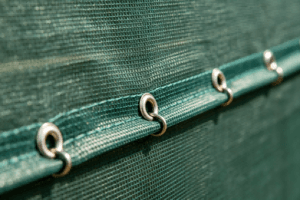
| Edge Border Engineering | Multi-layered Webbing + Eyelets (50cm) | Distributes pull-force stresses; prevents track slippage in motorized systems. |
| Dimensional Control | True-Width Extrusion Formatting | Minimizes roll shrinkage under intense summer heat, avoiding canopy gaps. |
Xinhang maintains strict quality control measures across its production lines, certifying every batch for breaking strength, bursting threshold, and uniform shade percentage. By avoiding common industry shortcuts like over-stretching or using unverified regrind blends, our factory delivers consistent product longevity to commercial cultivators globally.
Commercial Greenhouse Frequently Asked Questions
Q1: How does an internal retractable shade system compare mechanically to an external fixed net for greenhouse tomatoes?
Internal retractable setups allow for responsive microclimate control, opening during low-light mornings and closing during peak afternoon heat to maximize daily light accumulation. However, internal systems allow solar infrared radiation to pass through the greenhouse skin before it is blocked, trapping some heat inside. External installations block thermal energy before it enters the greenhouse, providing superior cooling efficiency, but require heavy-duty fabrics to withstand constant wind exposure.
Q2: Can a green shade net help control thrips or whiteflies in commercial tomato greenhouses?
Yes, photo-selective green and reflective silver meshes can influence insect behavior. Many common pests, including western flower thrips and whiteflies, rely on ultraviolet light spectra for navigation and host plant identification. Using spectrum-modifying nets alters the UV light signature inside the greenhouse, disrupting the insects’ visual orientation, reducing pest pressure, and limiting virus transmission.
Q3: What specific testing certifications should enterprise buyers request from a shade net manufacturer?
B2B procurement specifications should require independent lab certifications to verify field performance. Buyers should request ASTM D5034 reports for breaking strength and elongation, ASTM D3786 data for hydraulic bursting strength, and accelerated weathering data from QUV accelerated testers. These records ensure the material formulation contains sufficient UV stabilizers to withstand long-term field exposure in high-radiation regions.
Q4: How do you clean accumulated dust and organic biofilm off a greenhouse net without degrading the polymer structure?
To clean the fabric safely, use a low-pressure water wash combined with a mild, non-abrasive agricultural detergent. Avoid high-pressure power washers, as the concentrated force can fray thin polymer filaments. Additionally, never use halogenated disinfectants, sulfur-based compounds, or highly acidic chemicals, as these agents chemically break down the UV stabilizers within the HDPE matrix, shortening the material’s working lifespan.
References & Industry Standards:
- ASTM D5034 Textile Fabric Breaking Strength Test Parameters: Greenhouse Megastore Material Science Library
- Solanaceae Crop Microclimate and Vapor Pressure Deficit Standards: Farm Plastic Supply Agricultural Technical Reports
- Photo-Selective Spectrum and Crop Development Analysis: Greenpro Ventures Crop Shielding Review