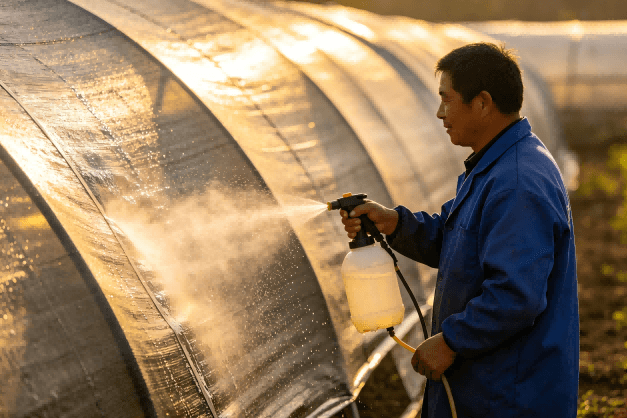
Extending the operational lifespan of commercial Agricultural Shade Net installations requires a dual-pronged approach: neutralizing chemical photo-oxidation at the molecular level and mitigating mechanical friction across the structural grid. Premature canopy failure is rarely an unavoidable consequence of harsh weather; rather, it is the direct result of aerodynamic flutter, improper agrochemical exposure, and poor off-season handling. By procuring 100% virgin High-Density Polyethylene (HDPE) compounded with advanced UV stabilizers, executing strict structural tensioning protocols, and implementing standardized off-season storage procedures, commercial agronomists can transform protective netting from a short-term consumable into a high-yield, multi-year infrastructure asset capable of surviving 5 to 7 years of extreme environmental exposure.
Table of Contents
- 1. Chemical Defense: Protecting the Polymer Matrix from UV Degradation
- 2. Eradicating Mechanical Friction and Aerodynamic Flutter
- 3. Navigating Agrochemical Interactions and Contamination
- 4. Biofilm Removal and Off-Season Storage Protocols
- 5. Enterprise Matrix: Degradation Factors and Mitigation Strategies
- 6. Sourcing Longevity: The Manufacturer’s Role
- 7. Frequently Asked Questions (FAQ) on Net Lifespan
Chemical Defense: Protecting the Polymer Matrix from UV Degradation
The foundation of agricultural textile longevity lies in its macromolecular architecture. When deployed in open fields, protective canopies are relentlessly bombarded by ultraviolet (UV) radiation. Without proper chemical defense, UV photons cleave the carbon-hydrogen bonds within the plastic, initiating a destructive chain reaction known as photo-oxidation. This process rapidly destroys the tensile strength of the fabric, turning flexible netting into brittle shards that shatter under minimal wind loads.
To extend operational life, procurement must focus exclusively on 100% virgin High-Density Polyethylene (HDPE). Recycled polymers, often sold by low-tier suppliers to cut costs, possess pre-degraded molecular structures and heavy metal impurities that act as catalysts for accelerated solar breakdown. Virgin HDPE provides a structurally dense, linear polymer foundation that resists environmental stress cracking.
However, even virgin HDPE requires heavy fortification. The integration of Hindered Amine Light Stabilizers (HALS) is non-negotiable. HALS molecules do not simply absorb UV light; they act as continuous free-radical scavengers. When UV radiation breaks a polymer bond, HALS immediately neutralizes the highly reactive free radical before it can cause chain cleavage, thereby preserving the polymer matrix. Ensuring the manufacturer utilizes high-concentration HALS masterbatches is the single most critical factor in achieving a 5 to 7-year material lifespan in high-radiation geographic zones.
Eradicating Mechanical Friction and Aerodynamic Flutter
While chemical degradation occurs over years, mechanical destruction can destroy a high-quality canopy in a single season. The primary physical enemy of an Outdoor Shade Net is aerodynamic flutter—the violent, high-frequency vibration of loose fabric caught in the wind.
Applying Precise Structural Tension
A lockstitch knitted mesh possesses inherent multidirectional elasticity. If installed loosely to the exact measurements of the ground, the wind will cause the fabric to whip repeatedly against galvanized steel hoops and tension wires. This localized mechanical friction acts like a saw, quickly wearing through the HDPE filaments.
To prevent this, the canopy must be stretched drum-tight. Installers must apply a negative tension allowance (typically deducting 1.5% to 3% from the total structural span) during sizing. When hoisted, the fabric is mechanically stretched to meet the anchoring points, eliminating slack and converting the loose mesh into a rigid aerodynamic shield that dissipates kinetic wind energy smoothly across the entire surface area.
Load-Distributing Tensioning Hardware
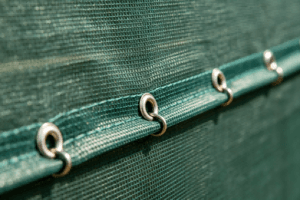
Securing the net with improper hardware guarantees localized tearing. Piercing the raw fabric with wire or thin zip-ties concentrates massive shear forces onto a few microscopic threads. Operators must utilize professional tensioning hardware designed to spread the load. Aluminum lock channels with wiggle wire, high-density polymer butterfly clips, and factory-installed brass grommets embedded in heavy-duty edge webbing are mandatory. Additionally, applying smooth PVC tape over any sharp welds or bolts on the steel greenhouse frame eliminates the risk of structural puncture during high-wind events.
Navigating Agrochemical Interactions and Contamination
Modern commercial agriculture relies on complex chemical applications to control pests and diseases. However, certain agrochemicals interact disastrously with the UV stabilizers embedded in the netting, chemically deactivating the HALS compounds and leaving the polymer defenseless against the sun.
The most destructive agents are halogens (chlorine, bromine) and sulfur-based compounds. Sulfur is frequently evaporated in greenhouses to combat powdery mildew and spider mites. When sulfur vapor condenses on the HDPE filaments, it chemically binds with the HALS scavengers, neutralizing their UV-blocking capabilities. An expensive canopy exposed to heavy sulfur fogging can degrade and shatter in less than two years.
To extend lifespan in chemically heavy environments, facility managers must:
- Minimize Direct Contact: Ensure spraying equipment nozzles are directed downward at the crop canopy, preventing high-pressure chemical updrafts from soaking the roof netting.
- Ventilation Flushing: Run exhaust fans at maximum capacity immediately following a sulfur burn or chemical fogging to clear acidic vapors from the microclimate before they condense on the textile.
- Procure Sulfur-Resistant Formulations: If sulfur use is unavoidable, consult with the manufacturer to procure specialized mesh compounded with sulfur-resistant UV stabilizers designed specifically for harsh agrochemical environments.
Biofilm Removal and Off-Season Storage Protocols
For operations located in regions with heavy snowfall or distinct seasonal growing cycles, the netting must be removed to prevent structural collapse under snow loads. How the fabric is handled during this removal phase dictates its survival for the following spring.
Cleaning and Biofilm Mitigation
Over a long summer, the mesh accumulates agricultural dust, pollen, and chemical residues. If stored dirty, ambient moisture will combine with this organic matter to form an acidic biofilm, promoting mold growth that stains the fabric and reduces light transmission. Before storage, the canopy must be washed. Lay the fabric on a clean concrete slab and use a low-pressure water hose combined with a mild, non-abrasive agricultural detergent. Never use a high-pressure power washer, as the intense PSI will physically slice through the polymer micro-threads.
The Rolling vs. Folding Rule
Once the fabric is 100% dry, it must be properly packaged for off-season storage. Never fold agricultural netting. Folding creates sharp, permanent creases in the HDPE matrix. Over a cold winter, these creases become severe stress points, and the polymer will crack along the fold lines when deployed the next year.
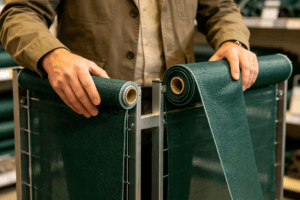
Instead, the net must be tightly rolled around a sturdy PVC or cardboard core. Once rolled, wrap the entire cylinder in an opaque, heavy-duty plastic film to block ambient warehouse lighting and prevent rodent nesting. Store the rolls horizontally on raised racks in a dry, well-ventilated warehouse.
Enterprise Matrix: Degradation Factors and Mitigation Strategies
The following matrix codifies the primary causes of premature material failure and the standardized operational protocols required to prevent them.
| Degradation Threat | Mechanism of Failure | Enterprise Mitigation Protocol |
|---|---|---|
| UV Photo-Oxidation | Solar radiation cleaves carbon-hydrogen bonds, causing severe brittleness and loss of tensile strength. | Procure strictly 100% Virgin HDPE fabrics heavily compounded with Hindered Amine Light Stabilizers (HALS). |
| Aerodynamic Flutter | Loose installations vibrate violently in the wind, causing catastrophic friction chafing against steel frames. | Apply 2% negative tension allowance during sizing. Stretch drum-tight and lock with load-distributing aluminum channels. |
| Agrochemical Neutralization | Sulfur and halogen vapors chemically deactivate the UV stabilizers, stripping the net of its solar defense. | Flush greenhouse air immediately after sulfur fogs; utilize specialized sulfur-resistant polymer additive packages. |
| Winter Crease Fracturing | Folding the fabric creates sharp creases that become permanent stress fractures during cold warehouse storage. | Wash with low-pressure water, dry completely, and tightly roll (never fold) onto rigid cores before opaque storage. |
| Edge Unraveling | Raw cut edges unravel rapidly when exposed to multidirectional wind loads. | Specify factory-sewn, heavy-duty multi-layered polyester webbing along all operational borders. |
Sourcing Longevity: The Manufacturer’s Role
Extending lifespan is impossible if the foundational textile is fundamentally flawed. In the global B2B market, trading companies often obfuscate the origin and chemical makeup of their plastics. To ensure structural survival, procurement directors must partner directly with primary manufacturing sources.
As a verified, globally integrated Shade Net manufacturer based in Lizhuang, Xinhang engineers longevity into the product before it ever leaves the factory floor. By rejecting recycled regrind and utilizing exclusively premium virgin HDPE resins infused with superior UV stabilizers, the chemical lifespan is guaranteed. Furthermore, Xinhang’s advanced warp-knitting equipment ensures the physical matrix possesses maximum puncture resistance. When paired with our custom edge-reinforcement capabilities, clients receive a Shade Net designed specifically to endure extreme wind shear and solar radiation, drastically lowering the long-term capital expenditure of large-scale farming operations.
Frequently Asked Questions (FAQ) on Net Lifespan
Q1: How exactly does sulfur vaporization in a greenhouse damage shade netting?
Sulfur is highly reactive. When vaporized to treat powdery mildew, the sulfur gas condenses on the HDPE filaments. This acidic condensation interacts chemically with the Hindered Amine Light Stabilizers (HALS) within the plastic, neutralizing their ability to scavenge UV-generated free radicals. Without active HALS, the polymer rapidly succumbs to photo-oxidation and turns brittle.
Q2: Can I use a high-pressure power washer to clean my netting before storage?
No. High-pressure power washers deliver highly concentrated kinetic force. This intense pressure can easily slice through the thin polymer filaments, fraying the yarns and creating microscopic weaknesses across the entire panel. Always use a low-pressure garden hose and a soft brush with mild detergent to safely remove biofilm and agricultural dust.
Q3: Should the netting be left on the greenhouse structure during the winter?
If the region experiences heavy snow, the netting must be removed. The porous mesh structure traps freezing rain, ice, and snow, which rapidly accumulate weight. This massive dead-load can easily exceed the engineering limits of the galvanized steel hoops, leading to catastrophic structural collapse. In snow-free tropical or arid regions, the net can safely remain installed year-round.
Q4: What is the difference between rolling and folding the net for off-season storage?
Folding the heavy-duty plastic creates sharp creases. When stored in cold warehouses, the polymer molecules stiffen, turning these creases into permanent structural weaknesses that will likely crack under tension the following spring. Rolling the net around a cylindrical core maintains the integrity of the yarns without inducing acute stress fractures, drastically extending the material’s operational life.
References & Industry Technical Standards:
- Polymer Degradation and UV Stabilization Mechanics: Farm Plastic Supply Material Science Guide
- Aerodynamic Flutter and Tension Hardware Analysis: Greenhouse Megastore Structural Engineering Protocols
- HDPE Maintenance and Agrochemical Interactions: Greenpro Ventures Lifespan Extension Reports