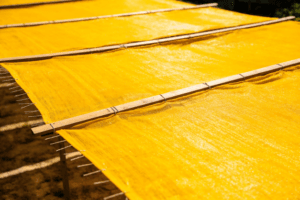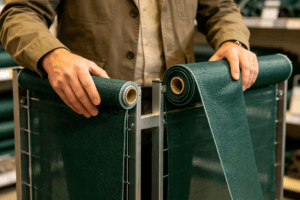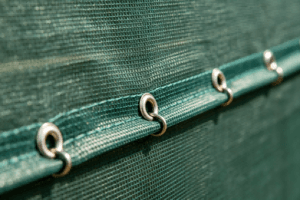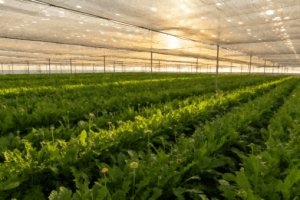
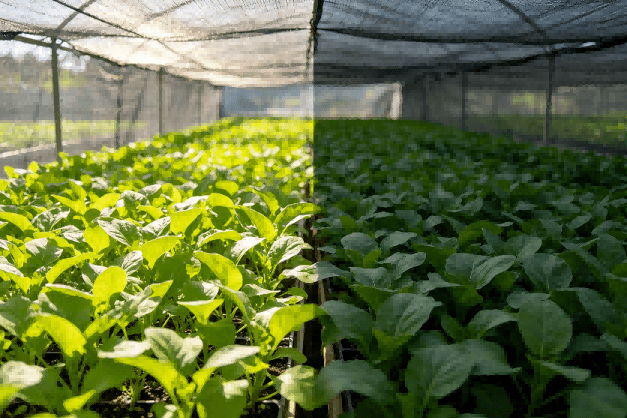
The fundamental difference between 30% and 60% density in a commercial Shade Net lies in the transmission volume of Photosynthetically Active Radiation (PAR) and the resulting thermodynamic modification of the nursery microclimate. A 30% density configuration transmits 70% of ambient solar radiation, serving as a mild thermal buffer designed specifically for heliophytic (sun-loving) plants; it prevents midday leaf tip-burn while maximizing carbohydrate production for rapid biomass accumulation. Conversely, a 60% density configuration blocks 60% of incoming solar energy, creating a heavily insulated, high-humidity microclimate required for sciophytic (shade-loving) ornamentals, broadleaf evergreens, and delicate vegetative propagation. For commercial nursery operators, selecting the precise shading coefficient dictates stomatal conductance, water retention, and the prevention of catastrophic photoinhibition across different botanical inventories.
Table of Contents
- 1. Photobiology and the Science of Light Saturation
- 2. The 30% Density Profile: Maximizing Biomass for Sun-Loving Crops
- 3. The 60% Density Profile: Thermal Mitigation for Sciophilic Ornamentals
- 4. Thermodynamic Control: Vapor Pressure Deficit (VPD) and Transpiration
- 5. Commercial Data: Density and Microclimate Comparison Matrix
- 6. Industrial Sourcing and High-Density Polymer Engineering
- 7. Nursery Shade Density Frequently Asked Questions (FAQ)
Photobiology and the Science of Light Saturation
To understand the exact impact of varying mesh densities on nursery crops, agronomists evaluate light through two specific metrics: Photosynthetically Active Radiation (PAR) and the Daily Light Integral (DLI). PAR represents the specific spectral wavebands (400 to 700 nanometers) that plant photoreceptors utilize to drive photosynthesis. DLI measures the total cumulative volume of those PAR photons delivered to a single square meter of the crop canopy over a 24-hour period.
Every plant species possesses a genetic light saturation point. This is the maximum threshold of light intensity the plant can successfully convert into chemical energy. When ambient solar radiation exceeds this saturation point, the excess photon energy cannot be utilized by the chloroplasts. Instead, this excess energy causes the plant’s internal temperature to spike, leading to a defensive physiological shutdown known as photoinhibition. During photoinhibition, the plant closes its stomata to conserve water, abruptly halting carbon dioxide assimilation and stopping all growth.
Prolonged exposure beyond the saturation point results in chlorophyll bleaching, severe cellular dehydration, and necrotic spotting (sunscald) on the foliage. The objective of commercial shading is to deploy a density configuration that reduces the peak midday solar irradiance to sit just below the crop’s specific light saturation point, ensuring continuous, uninterrupted photosynthesis throughout the entire photoperiod.
The 30% Density Profile: Maximizing Biomass for Sun-Loving Crops
A 30% density configuration is classified as a low-tier shading barrier. This matrix is engineered to intercept only 30% of incoming solar energy, allowing a massive 70% of ambient PAR to reach the nursery floor. In terms of structural geometry, this requires a relatively open knitted loop pattern, which facilitates exceptional convective airflow and rapid heat venting.
Target Botanical Profiles for 30% Density
This specific density is strictly engineered for heliophytic crops—plants biologically adapted to thrive in full, direct sunlight. Common nursery inventory utilizing 30% coverage includes field-grown vegetable transplants (tomatoes, peppers, cucumbers), fruit tree saplings, robust flowering annuals (zinnias, marigolds), and hardy turfgrass propagation trays.
These species require a massive Daily Light Integral (DLI) to fuel rapid vegetative expansion and robust root development prior to field transplanting. Deploying an Agricultural Shade Net at 30% density does not deprive these hungry crops of necessary light. Instead, it functions purely as an optical diffuser and a peak-hour thermal buffer.
Microclimate Mechanics of 30% Shading
During the extreme heat of early afternoon, clear, unshielded sunlight delivers harsh, specular radiation that causes rapid leaf heating. The 30% polymer matrix intercepts these direct rays, scattering the photons and converting specular light into diffuse light. This diffusion lowers the peak leaf surface temperature by 2°C to 4°C. By shaving off this extreme thermal spike, the 30% net prevents stomatal closure, allowing the sun-loving seedlings to continue transpiring and growing during the hottest hours of the day without suffering from tip-burn or stem stretching (etiolation).
The 60% Density Profile: Thermal Mitigation for Sciophilic Ornamentals
A 60% density configuration represents a mid-to-high level environmental barrier. By physically blocking 60% of all incoming solar radiation, this tightly knitted structural mesh drastically alters the underlying thermodynamic state of the nursery environment. The dense interlacing of the polymer filaments restricts a significant portion of both visible light and near-infrared (NIR) thermal energy.
Target Botanical Profiles for 60% Density
This heavy coverage is mandatory for sciophytic crops—plants biologically evolved to thrive in the understory of dense forest canopies. Commercial nurseries rely on 60% density to cultivate high-value broadleaf evergreens (hostas, calatheas, philodendrons), delicate ferns, orchids, bromeliads, and shade-tolerant shrubs like azaleas and hydrangeas.
Furthermore, a 60% canopy is critical in commercial propagation sectors. When cuttings are first taken and placed in rooting hormones, they lack a root system to uptake water. Exposing unrooted cuttings to high light intensity drives fatal dehydration. A 60% density net forces the cutting to remain in a low-metabolism survival state, prioritizing cellular differentiation (root generation) over foliar expansion.
Microclimate Mechanics of 60% Shading
Deploying an Outdoor Shade Net at 60% density actively suppresses the internal solar heat flux. In high-radiation zones or intense summer seasons, this dense matrix can reduce ambient temperatures beneath the canopy by 5°C to 8°C. Because the mesh restricts airflow more than a 30% net, it acts to trap moisture evaporating from the soil and transpiring from the plants, elevating the localized relative humidity. This insulated, cool, and highly humid environment is the exact replication of a natural jungle understory, preventing chlorophyll degradation in delicate, broad-leafed species.
Thermodynamic Control: Vapor Pressure Deficit (VPD) and Transpiration
Beyond simply managing light volume, the difference between 30% and 60% netting profoundly impacts the Vapor Pressure Deficit (VPD) of the nursery. VPD is the mathematical difference between the amount of moisture in the air and how much moisture the air can hold when it is saturated. It is the primary metric that drives plant transpiration (the suction force that pulls water and nutrients from the roots up to the leaves).
A 30% density net maintains a higher VPD. Because it allows more heat to penetrate and permits higher airflow, the air remains relatively dry and warm. This higher VPD pulls moisture rapidly through robust vegetable seedlings, driving heavy nutrient uptake from the soil matrix. As long as the root zone is adequately irrigated, this high transpiration rate fuels massive, explosive growth.
Conversely, a 60% density net actively lowers the VPD. By cooling the air and trapping moisture, the air beneath the canopy approaches saturation. A low VPD means the atmosphere exerts very little “pull” on the plant’s moisture reserves. This low-transpiration environment is highly protective. It allows unrooted cuttings, recently grafted saplings, and humidity-loving tropicals to survive without suffering from vascular cavitation or desiccation stress.
Commercial Data: Density and Microclimate Comparison Matrix
The following operational matrix outlines the diverging performance parameters of 30% and 60% shading infrastructures across commercial nursery applications.
| Environmental / Agronomic Metric | 30% Density Profile | 60% Density Profile |
|---|---|---|
| PAR Transmission Volume | 70% (High Daily Light Integral for fast growth). | 40% (Restricts light to prevent photoinhibition). |
| Thermal Reduction (Ambient) | Minimal to Moderate (2°C to 4°C drop). | Significant (5°C to 8°C drop). |
| Aerodynamic Porosity (Wind) | High airflow. Vents heat easily. | Lower airflow. Functions as a moderate windbreak. |
| Vapor Pressure Deficit (VPD) | Higher VPD (Promotes rapid nutrient transpiration). | Lower VPD (Traps humidity, protects delicate foliage). |
| Primary Nursery Applications | Tomato/pepper transplants, turfgrass, field flowers. | Orchids, ferns, cloning, grafting, overwintering. |
Industrial Sourcing and High-Density Polymer Engineering
Whether a facility requires a lightweight 30% diffusion screen or a heavy 60% thermal barrier, the longevity of the infrastructure relies entirely on the polymer science behind the extrusion. Low-grade textiles manufactured from recycled plastics suffer from rapid photo-oxidation, resulting in brittle fibers that shatter within 18 months of deployment.
To secure enterprise-grade reliability, operations must source directly from verified production hubs. As a premier Shade Net manufacturer located in Lizhuang, China’s historic center for rope and netting manufacturing, Xinhang utilizes exclusively 100% Virgin High-Density Polyethylene (HDPE).
Our HDPE masterbatches are heavily compounded with advanced Hindered Amine Light Stabilizers (HALS). Rather than passively absorbing UV light, HALS actively scavenges the free radicals generated by solar radiation, preventing polymer chain cleavage. Furthermore, Xinhang utilizes precision warp-knitting machinery to create an interlocking lockstitch matrix. This guarantees that whether you deploy a 30% or a 60% mesh, the material provides total puncture immunity—isolating any accidental tears to a single micro-loop and delivering 5 to 7 years of relentless, true-width microclimate protection.
Nursery Shade Density Frequently Asked Questions (FAQ)
Q1: Will using a 60% shade net on sun-loving crops like tomatoes severely damage the yield?
Yes. Sun-loving crops (heliophytes) require high volumes of light to produce carbohydrates. If you place a 60% net over tomatoes, peppers, or cucumbers, the plants will experience light starvation. They will initiate a “shade avoidance” response, causing their stems to stretch dangerously thin (etiolation) in an attempt to reach the sun. This results in weak, spindly transplants that will likely snap when moved to the open field, and severely delays any potential fruit set.
Q2: Can I layer two 30% shade nets on top of each other to achieve a 60% shading effect?
No, the physics of light transmission do not stack linearly in simple addition. If you layer two 30% nets, the first net allows 70% of the light through. The second net then blocks 30% of that remaining 70%, allowing 49% of the total original light through. Therefore, two 30% nets equal roughly a 51% shade density, not 60%. Additionally, layering nets traps dead air between the layers, creating unwanted heat pockets and causing friction damage as the two fabrics rub against each other in the wind.
Q3: How does the color of a 60% shade net (black vs. green) affect shade-loving nursery plants?
While both block 60% of total light volume, their spectral outputs differ. A black 60% net acts as a neutral filter, reducing all wavelengths equally, making it a pure thermal and light barrier. A green 60% net is photo-selective; it absorbs red and blue light while transmitting green light. This lowers the Red to Far-Red (R:FR) ratio, mimicking a natural forest understory. For ornamental foliage plants like ferns and calatheas, this spectral shift encourages broader leaf expansion and deeper chlorophyll pigmentation, increasing their retail aesthetic value.
References & Industry Agronomic Standards:
- Microclimate Optimization and Vapor Pressure Deficit Controls: Farm Plastic Supply Technical Frameworks
- Light Saturation Points and Photosynthetic Active Radiation Metrics: Greenhouse Megastore Scientific Guidelines
- HDPE Polymer Density and Thermal Modification Analysis: Greenpro Ventures Shading Efficacy Reports