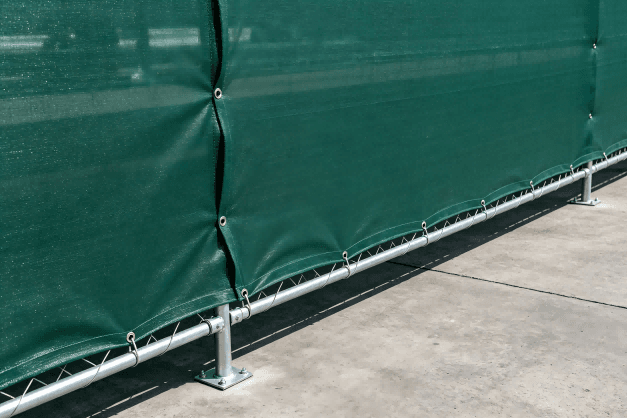
Repairing tears in heavy-duty commercial shading under high wind loads requires immediately neutralizing localized aerodynamic drag and mechanically restoring the multidirectional tensile strength of the polymer matrix. When a high-velocity wind gust exploits a minor puncture, the resulting kinetic tension concentrates massive shear force onto the compromised yarns, accelerating tear propagation. To execute a permanent structural repair, facility managers must temporarily disengage the panel’s tension, clean the hydrophobic surface of agricultural dust, and utilize either UV-stabilized monofilament lacing for large ruptures or high-adhesion industrial polymer tape for micro-punctures. Understanding the structural geometry of the Shade Net ensures the repair distributes wind load efficiently, preventing the catastrophic loss of the entire environmental canopy.
Table of Contents
- 1. The Mechanics of Tear Propagation Under Aerodynamic Drag
- 2. Immediate Triage: Neutralizing Kinetic Tension Prior to Repair
- 3. Repair Methodology 1: Industrial Monofilament Lacing
- 4. Repair Methodology 2: High-Adhesion Polymer Tape Integration
- 5. Commercial Data: Repair Technique Efficacy Matrix
- 6. Enterprise Procurement: Preventing Tears Through Lockstitch Engineering
- 7. Frequently Asked Questions (FAQ) on Field Repairs
The Mechanics of Tear Propagation Under Aerodynamic Drag
Commercial textiles suspended over large agricultural or industrial spans operate in volatile microclimates. When an intact panel is subjected to high-velocity wind, the kinetic energy is absorbed uniformly across the entire grid. However, when a puncture occurs—typically from falling debris, sharp hailstones, or mechanical friction against steel frames—the fluid dynamics of the wind load change instantly.
Wind accelerates as it forces its way through the new, enlarged aperture. This creates a localized pressure differential that aggressively pulls at the frayed edges of the tear. If the textile is a standard woven fabric, the lack of interlocking loops means the perpendicular yarns will immediately lose friction and slide apart, causing the fabric to unravel rapidly across the entire span.
A warp-knitted lockstitch matrix possesses superior puncture immunity because the interlocking loops isolate the broken filament. Nevertheless, under sustained, extreme wind shear, even a lockstitch can be overwhelmed if the localized tension exceeds the mechanical breaking strength of the surrounding loops. Repairing the fabric is fundamentally an exercise in re-establishing the continuous surface area to eliminate the pressure differential and restoring the original tensile strength of the grid.
Immediate Triage: Neutralizing Kinetic Tension Prior to Repair
Attempting to sew or tape a damaged panel while it remains under active wind load guarantees failure. The mechanical forces pulling the tear apart will instantly snap new lacing cord or shear off repair adhesives.
Step 1: Tension Release. The installation crew must first disengage the turnbuckles, aluminum lock channels, or bungee fasteners securing the compromised section. Dropping the tension entirely removes the kinetic tension from the damaged yarns, allowing the fabric to return to a relaxed state.
Step 2: Surface Preparation. High-Density Polyethylene (HDPE) is inherently hydrophobic and naturally repels moisture and adhesives. Furthermore, agricultural panels accumulate fine particulate dust and organic biofilm. Before applying any repair material, the immediate 20 cm radius surrounding the tear must be scrubbed with a mild detergent and allowed to dry completely. Failure to execute this cleaning protocol will cause repair tape to delaminate within 24 hours.
Step 3: Edge Trimming. Examine the rupture. Frayed, micro-shredded filaments cannot hold a structural repair stitch. Using industrial shears, cleanly cut away the severely deformed or stretched polymer threads until you reach solid, perfectly intact lockstitch loops. This provides a stable structural integrity baseline for the incoming repair.
Repair Methodology 1: Industrial Monofilament Lacing
For ruptures exceeding 10 centimeters in length, adhesive tape is insufficient to handle aerodynamic shear. Large tears require mechanical suturing using a heavy-duty, UV-stabilized monofilament lacing cord. This cord must match or exceed the UV resistance and tensile strength of the base netting.
The Overlap and Stitch Protocol
Do not attempt to pull the two edges of the tear flush against each other. High wind will easily rip a flush seam. Instead, if the panel possesses sufficient elasticity, overlap the two edges of the tear by a minimum of 5 centimeters.
Utilizing a heavy-gauge industrial netting needle, begin stitching at least 5 centimeters before the start of the tear, anchoring the thread in undamaged territory. Employ a continuous spiral lacing technique (often called a whip stitch). Ensure the needle penetrates at least three to four intact loop rows deep into the healthy fabric on both sides of the rupture. This deep penetration guarantees that the newly introduced mechanical friction is distributed across dozens of solid polymer loops rather than pulling on the weakened margin.
Once the tear is fully laced, tie off the monofilament cord with a secure double half-hitch knot, again anchored deep in undamaged fabric. This method restores the panel’s ability to safely transfer wind energy across the compromised zone without relying on chemical adhesives.
Repair Methodology 2: High-Adhesion Polymer Tape Integration
For micro-punctures, hail strikes under 5 centimeters, or small friction burns, mechanical lacing is unnecessary and highly time-consuming. In these instances, specialized agricultural repair tape provides an immediate, high-efficiency seal.
Selecting the Correct Adhesive Profile
Standard duct tape or hardware store adhesives utilize natural rubber or low-grade acrylic glues that rapidly fail under photo-oxidation and extreme greenhouse heat. Commercial repair tape is manufactured with an aggressive, UV-stabilized butyl or high-grade acrylic adhesive bonded to an extruded PE (Polyethylene) backing.
The Double-Sided Application Technique
Cut a strip of repair tape that extends at least 8 centimeters past the puncture in all directions. Round the corners of the tape with scissors; sharp 90-degree corners create snag points where wind can catch and peel the tape backward.
Apply the first patch to the exterior (sky-facing) side of the Outdoor Shade Net. Press firmly, utilizing a hard rubber seam roller to force the adhesive deep into the porous micro-apertures of the lockstitch grid. Immediately apply an identical, identically sized patch to the exact same location on the interior (ground-facing) side. Pressing the two adhesive layers against each other through the porous holes of the netting creates a permanent, waterproof, monolithic polymer weld that fully neutralizes aerodynamic drag through the puncture.
Commercial Data: Repair Technique Efficacy Matrix
Agronomists and maintenance engineers must match the correct repair protocol to the specific structural damage profile to prevent secondary canopy failures.
| Damage Profile | Optimal Repair Methodology | Wind Load Capacity (Post-Repair) | Labor & Time Requirement |
|---|---|---|---|
| Micro-Punctures (< 5 cm) | Double-sided PE agricultural repair tape. | High. Restores full aerodynamic seal. | Low. Requires surface cleaning and rolling. |
| Linear Tears (5 cm – 30 cm) | UV-monofilament spiral lacing (deep loop penetration). | Very High. Mechanical suturing absorbs extreme shear force. | Moderate. Requires tension release and manual stitching. |
| Edge Selvedge Rupture | Splice-in new polyester webbing; reinstall brass grommets. | Moderate. Edge load distribution is difficult to restore manually. | High. Often requires specialized heavy-duty sewing equipment. |
| Catastrophic Blowout (> 1 meter) | Full panel replacement or factory-sewn modular splice. | Maximum (New material baseline). | Very High. Structural re-engineering required. |
Enterprise Procurement: Preventing Tears Through Lockstitch Engineering
While mastering field repair techniques is essential for facility maintenance, the ultimate agronomic strategy is procuring a textile engineered to prevent tear propagation entirely. Sourcing inferior woven fabrics guarantees that a single hailstone will trigger an unrecoverable unravelling event during the next high-wind storm.
Enterprise managers must specify precise manufacturing tolerances to safeguard their infrastructure. As a globally verified Shade Net manufacturer based in the industrial epicenter of Lizhuang, Xinhang guarantees maximum puncture immunity by utilizing highly calibrated warp-knitting machinery. Our lockstitch matrices are extruded from 100% virgin HDPE masterbatches heavily fortified with Hindered Amine Light Stabilizers (HALS). This ensures the polymer does not suffer from brittle photo-oxidation, preserving its natural multidirectional elasticity.
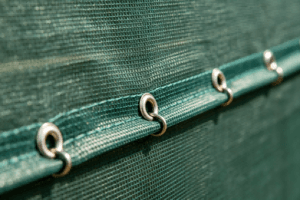
Furthermore, Xinhang drastically reduces edge ruptures—the most common site of wind failure—by engineering commercial panels with heavy-duty multi-layered polyester tape borders and deeply set brass grommets. By distributing tension loads seamlessly across the structural boundary, a Xinhang Agricultural Shade Net actively resists aerodynamic shear, minimizing the need for manual field repairs and maximizing continuous crop protection.
Frequently Asked Questions (FAQ) on Field Repairs
Q1: Can I use standard nylon fishing line to stitch a tear in my shade net?
No. Standard nylon fishing line is not adequately UV-stabilized for continuous outdoor exposure. Under intense solar radiation, standard nylon will become brittle and snap within a single summer, causing the repair to fail. You must use specialized, high-density polyethylene (HDPE) monofilament thread treated with HALS additives to ensure the stitch outlasts the lifespan of the panel itself.
Q2: Why did my agricultural repair tape peel off after the first rainstorm?
Repair tape failures are almost universally caused by poor surface preparation. HDPE is naturally hydrophobic and repels adhesives. If the area around the puncture is covered in microscopic dust, pollen, or agricultural chemical residues, the adhesive bonds to the dirt rather than the polymer. Always clean the area with a mild detergent, let it dry entirely, and apply pressure with a hard roller to force the adhesive into the netting matrix.
Q3: What should I do if a tear occurs directly along the reinforced edge webbing?
Edge ruptures are the most dangerous failures because the border handles the primary structural tension of the entire panel. Simple lacing is often insufficient here. The section must be entirely de-tensioned, and a new segment of heavy-duty polyester webbing must be folded over the torn edge and machine-sewn into place before installing a new brass grommet. If field sewing is unavailable, the panel must be replaced to prevent catastrophic aerodynamic blowout.
References & Technical Agronomy Standards:
- Polymer Repair Methodologies and Aerodynamic Wind Load Mitigation: Farm Plastic Supply Field Protocols
- Structural Tension Integration and Tear Propagation Data: Greenhouse Megastore Engineering Guidelines
- Lockstitch Matrix Efficacy and Structural Rupture Containment: Greenpro Ventures Mesh Diagnostics